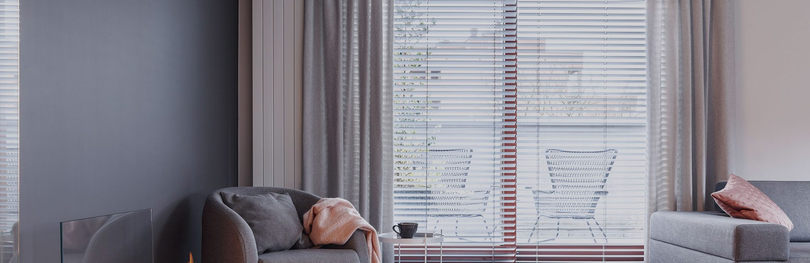

Cold rolls off a window long before anyone notices a draft. Single-pane glass in an older building pulls warmth out of a room all night, which is why a sofa placed against the window wall always feels colder than the same sofa across the room. Radiators compensate by running harder. The room still feels uneven. A shade doesn’t fix the glass, but it does add a layer of still air between the room and the cold surface, and that layer does more work than most people assume.
What to Expect From a Shades Store Near Me in Winter
Anyone searching shades store near me in November is usually reacting to a specific room that never warms up. The question worth asking a retailer isn’t which fabric looks best, but how the shade seals at the edges. A shade hanging an inch away from the frame lets warm room air slip behind it, cool against the glass, and drop back into the room. Side channels, a snug inside mount, or a slightly oversized outside mount all reduce that movement.
How Custom Shades Are Fitted to Older Manhattan Windows
Established window treatment specialists in New York, including The Blinds Source, handle the fit as part of the order. An in-home consultation looks at frame depth, the gap between sash and casing, whether a radiator sits directly below, and how much clearance the window well allows. Free estimates and installation are included. Shades cut to the measured opening close the edge gaps that off-the-shelf sizes leave behind.
Trapped Air Is What Actually Slows Heat Loss
Honeycomb Shades get recommended for cold rooms because of their shape. The cells hold pockets of air, and air that cannot move transfers heat slowly, which is the principle behind thermal resistance in any insulating material. Double-cell constructions hold more air than single-cell. The effect is real but modest, and it depends heavily on how well the shade seals at the sides. A shade with open edges gives back much of what the cells provide.
Condensation Is the Other Winter Problem
Shades can make window condensation worse, which surprises people. Warm indoor air meets cold glass, and moisture forms once the surface drops below the dew point, the temperature at which air can no longer hold its water vapor. A tightly sealed shade keeps room heat off the glass, so the glass runs colder and condensation forms more readily behind it. Raising the shade for part of the day helps. In a bedroom with a humidifier running, this matters more than in a dry living room.
Which Shades Suit Which Winter Problem
Different symptoms point to different treatments.
- Cold radiating from the glass calls for Honeycomb Shades, ideally with a close fit at the sides
- Rooms that need darkness as well as insulation do better with Blackout Shades layered behind or in front of a fabric panel
- Windows above radiators need a shade that stops cleanly above the unit rather than resting against it
- Kitchens and bathrooms, where moisture is higher, handle Roller Shades or Bamboo Shades without trapping damp against the frame
- Skylight Shades cover the overhead glass in converted lofts, where heat loss is usually worst
Pleated Shades sit somewhere in the middle. They look similar to honeycomb at a glance but do not hold air the same way, so the thermal benefit is smaller.
Operating Mechanisms Matter More Than People Expect
Cordless operation has become the standard for anything within a child’s reach. It also looks cleaner, with nothing hanging down the side of the frame. Continuous loop systems suit tall or heavy shades where a cordless lift would take effort.
Top-down/bottom-up operation deserves a mention. The shade can be lowered from the top to let daylight in at the ceiling while the lower half stays closed for privacy. In a ground floor apartment facing a sidewalk, that arrangement solves a problem nothing else solves quite as neatly.
Layering Shades With Drapes for Colder Rooms
A shade and a lined panel work better together than either alone. The shade handles the glass. The panel covers the whole opening, including the gap around the frame, and adds fabric weight against drafts. Drapes and Curtains hung slightly wider than the window help here, since the panels then seal against the wall rather than the casing.
This layered approach costs more, obviously. Some rooms justify it, and some do not. A north-facing bedroom probably does. A small bathroom window probably does not.
Two Manhattan showrooms let you handle cell structures and test lift mechanisms directly, and customer service runs twelve hours a day from Sunday through Thursday. Pressing a honeycomb cell between two fingers tells you more about how it will perform than any description does.